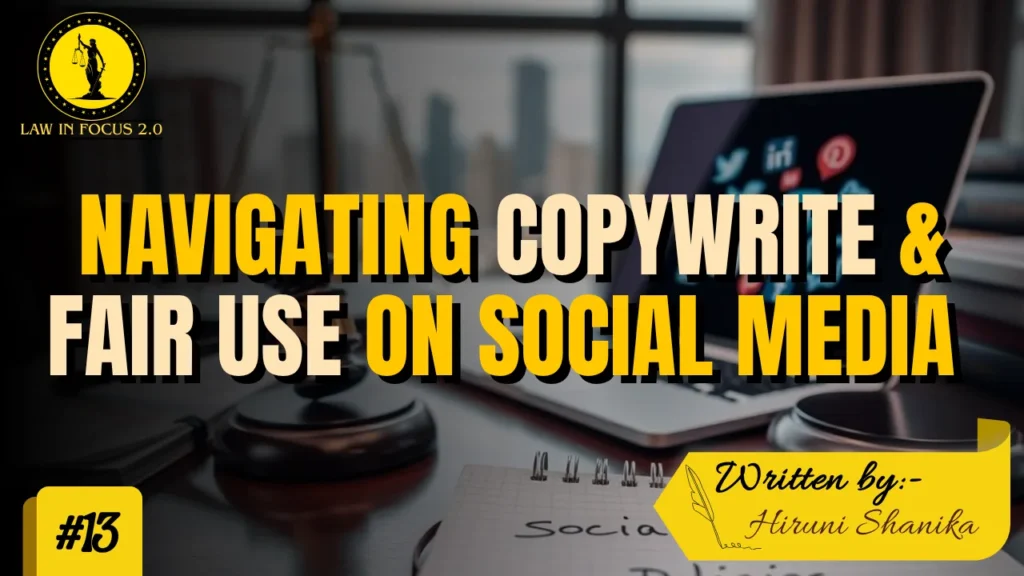
Every day, billions of videos, memes and audio tracks are created, shared and remixed across social media platforms. From viral TikTok trends to Instagram Reels and YouTube video essays, digital culture thrives on reusing existing media. However, beneath the seamless tapping and sharing lies a complex legal landscape. Many content creators operating online unknowingly commit copyright infringement, assuming that tagging the original author or adding a brief disclaimer provides immunity. Understanding how copyright law operates in the digital era and how the legal defence of “fair use” actually works, is essential for anyone building a presence on social media.
At its core, copyright law grants creators exclusive legal rights over their original works, including photographs, music tracks, video clips and written posts. The moment a person records a video or composes a song, that content is automatically protected by copyright. On social media, uploading or repurposing someone else’s protected material without explicit permission, a commercial license, or a valid legal exception constitutes copyright infringement. While platforms like Meta, TikTok and YouTube offer built-in sound libraries with licensed music, using copyrighted music or video footage outside those official agreements can lead to content muted videos, account strikes, or complete account termination under digital copyright enforcement laws.
One of the most persistent myths on the internet is that giving credit shields a user from legal liability. Adding “No copyright infringement intended” or “Credit to the original owner” in a video caption holds no legal weight in court. Attribution is not a substitute for permission. Similarly, keeping a copyrighted music clip under five or ten seconds does not automatically make it legal; copyright law protects original works regardless of length if a substantial or core portion of the work is used. Simply altering the pitch of an audio track or adding a small overlay filter also fails to transform the content sufficiently under standard legal protections.
To legally use copyrighted material without direct permission, creators often rely on the legal doctrine known as “fair use”. Fair use is an affirmative defence that permits limited use of copyrighted works for specific transformative purposes, such as commentary, criticism, news reporting, teaching, or parody. Courts evaluate fair use by examining four key factors: the purpose and character of the use (whether it is transformative and non-commercial), the nature of the copyrighted work, the amount and substantiality of the portion used relative to the whole and the effect of the use upon the potential market value of the original work.
The critical keyword in modern fair use disputes is “transformative.” To qualify as transformative, your content must add something fundamentally new, a distinct message, insight, or aesthetic, rather than serving as a direct replacement for the original work. For example, playing an entire music video in the background while silently reacting adds very little transformative value and rarely qualifies as fair use. Conversely, pausing a clip to critique its cinematography, analyse its message, or poke fun at it through clear satire or parody aligns much more strongly with fair use standards. The goal must be to comment on the media, rather than merely using the media to entertain your audience for free.
Understanding legal definitions is only half the battle; creators must also navigate automated platform enforcement. Social media networks employ sophisticated algorithmic matching tools, such as YouTube’s Content ID system and Meta’s Rights Manager, that scan uploaded videos against vast databases of copyrighted audio and visual files. These automated bots do not evaluate context or determine whether your video qualifies as fair use. If a match is flagged, your video may be automatically muted, demonetised, or taken down instantly. While creators can submit counter-notifications claiming fair use, resolving automated claims often requires patience and formal appeals processes.
Navigating copyright safely requires adopting smart, proactive habits. Whenever possible, create fully original audio and visual assets or source media from royalty-free libraries and Creative Commons databases. If you must analyse or react to external media, use only the precise snippet necessary to make your point rather than copying full scenes. Ensure your commentary is central to the post and avoid using copyrighted content for direct commercial advertisements or sponsored promotions without an official license. By respecting intellectual property rights and applying fair use principles responsibly, creators can build sustainable, engaging channels without risking takedown notices or legal disputes.
Written By: –

Wanniarachchi Hiruni Shanika
(University Of Sri Jayawardhanapura)
Designed by: –

Rtr. Pesandi Senawatta
(Senior Blog Team Member 2026-27)