
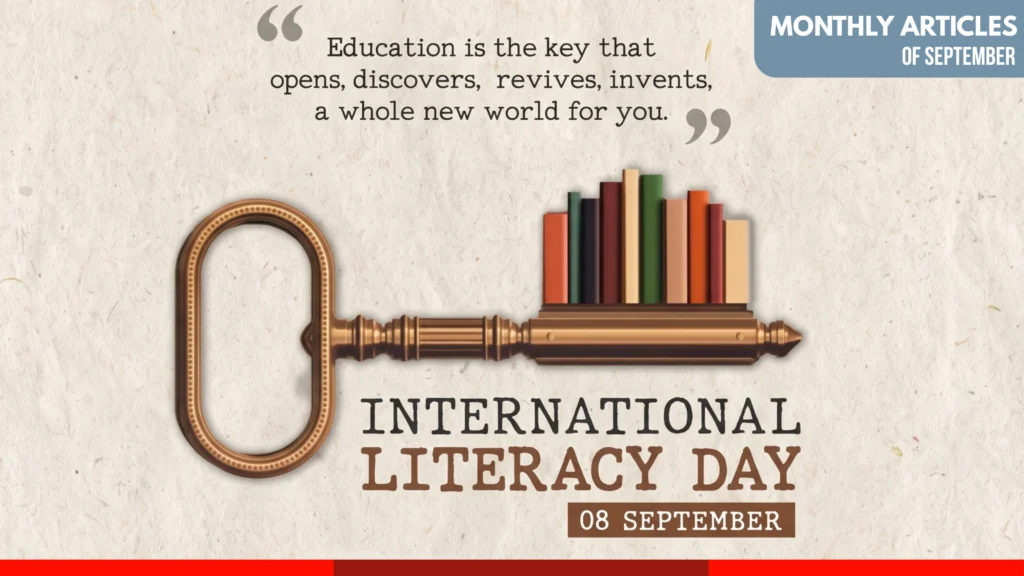
International Literacy Day is celebrated every year on 8th September to highlight the importance of literacy as a fundamental human right and an essential foundation for education and development. The day was proclaimed by UNESCO in 1966 and has been observed globally since 1967. It provides an opportunity to remind individuals, communities, governments and organisations that literacy is not only about the ability to read and write but also about gaining the knowledge and skills needed to participate effectively in society. It encourages the world to work towards creating equal educational opportunities for everyone.
Literacy plays a significant role in improving the quality of life of individuals and communities. A person who can read and write is better able to access information, communicate with others, understand important documents and make informed decisions. Literacy also helps people understand information related to health, employment, finance and their legal rights. For children, developing strong literacy skills creates a foundation for successful learning in other subjects. Therefore, literacy is closely connected with personal development, independence and social progress.
Despite significant progress in education around the world, millions of people still face difficulties in accessing quality education and developing basic literacy skills. Poverty, conflict, discrimination, geographical isolation, disability and limited educational resources can prevent children and adults from receiving proper education. In some communities, children may be forced to leave school early to support their families, while adults may never have had the opportunity to attend school. These challenges demonstrate that literacy is not simply an individual responsibility but also a social issue that requires collective action.
International Literacy Day also emphasises the importance of lifelong learning. Literacy is not something that ends when a person completes school. In today’s rapidly changing world, people need to continuously develop their knowledge and skills. Digital technology has created new forms of literacy, including digital, media and information literacy. People need to know how to find reliable information online, understand digital content, communicate responsibly and protect themselves from misinformation and online risks. As technology becomes increasingly important in education and employment, digital literacy has become an essential part of modern life.
Teachers and educational institutions have a particularly important role in promoting literacy. Teachers not only teach students how to read and write but also encourage curiosity, critical thinking, creativity and a love of learning. Schools and universities can create supportive learning environments by providing access to books, libraries, technology and educational resources. Governments also have a responsibility to invest in education, train teachers, improve school facilities and ensure that disadvantaged communities receive the support they need.
Families and communities can also make a valuable contribution to literacy. Parents can encourage children to read books, share stories, discuss ideas and explore new subjects. Community libraries, reading programmes, volunteer teaching initiatives and educational campaigns can provide additional opportunities for people who have limited access to formal education. Even simple activities such as reading together at home can help children develop confidence and interest in learning.
Young people can play an important role in promoting literacy among others. Students and youth organisations can organise book donation campaigns, reading programmes, tutoring sessions, educational workshops and awareness campaigns. They can also use social media and digital platforms to share educational content and encourage others to develop their reading and learning habits. By volunteering their time and skills, young people can help create a culture where education and knowledge are valued by everyone.
In conclusion, International Literacy Day is a reminder that literacy is a powerful tool for creating opportunities and building a better society. It gives people the ability to learn, communicate, make informed choices and participate meaningfully in their communities. However, achieving universal literacy requires cooperation among governments, educational institutions, families, communities and individuals. Everyone deserves the opportunity to learn, regardless of their background or circumstances. By promoting literacy and lifelong learning, we can reduce inequality, empower individuals and contribute to a more educated, inclusive and sustainable world.
Written By: –

Rtr. Adithyaya Kawindi
(Senior Blog Team Member 2026-27)