
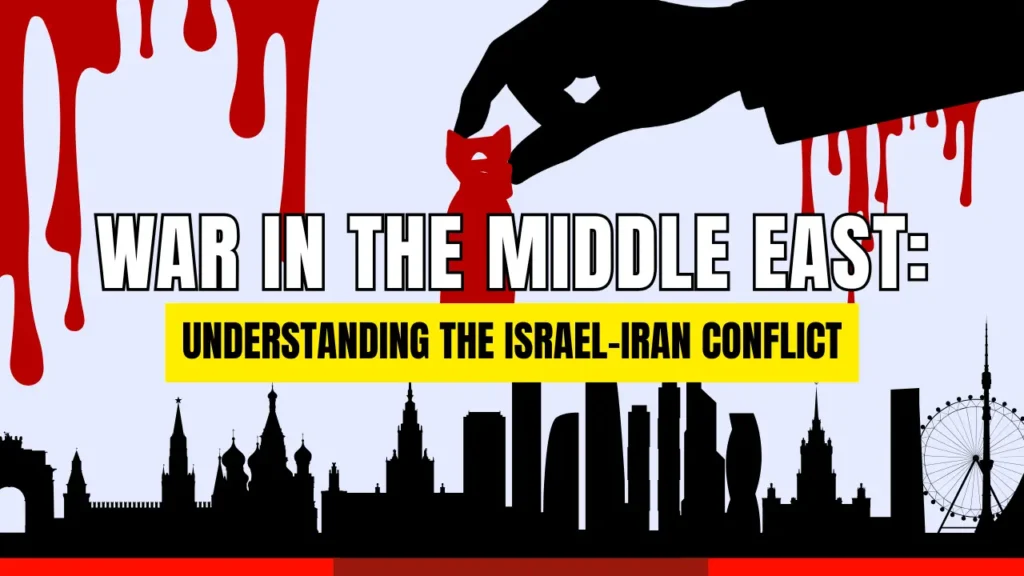
The Israel – Iran conflict involving the United States has become one of the most significant geopolitical crises in 2026. Israel and Iran have had a long standing rivalry, with Iran opposing Israel’s existence and Israel consistently accusing Iran of developing nuclear weapons and expanding its influence across the Middle East. These long-standing tensions have periodically resulted in covert operations, cyberattacks and proxy conflicts. However, the current situation marks a more direct and visible escalation, raising concerns about wider regional instability and its impact on the world as a whole.
The conflict primarily escalated when military strikes targeted Iranian facilities and strategic infrastructure, prompting Iran to retaliate via missile and drone attacks. Further, one of the most critical global concerns arising from the conflict is the potential disruption of energy supplies. Much of the world’s oil passes through the Strait of Hormuz, a shipping route near Iran. Any instability in this region threatens the flow of global oil supplies, leading to increased energy prices in international markets.
Although the conflict is geographically distant from Sri Lanka, its effects are already being felt within our country. Sri Lanka, like many countries, relies on imported fuel. Rising global oil prices caused by instability in the conflict could therefore increase the cost of fuel imports for the country. Given Sri Lanka’s recent economic challenges, any significant rise in global energy prices could place additional pressure on the country’s financial stability.
Trade is another area where the conflict could affect Sri Lanka. The Middle East is an important market for several Sri Lankan exports, including tea, garments, and other goods. If the conflict disrupts shipping routes or weakens economic activity in the region, demand for Sri Lankan exports could decline. Additionally, global shipping costs could increase if vessels avoid certain routes or face higher insurance costs due to security risks in the region.
Despite its neutral stance, Sri Lanka has had some indirect connections to the situation through humanitarian and maritime incidents. Several maritime incidents in the region have required humanitarian assistance and cooperation between international authorities. Sri Lankan authorities have also cooperated with diplomatic personnel when handling such situations. These actions were primarily humanitarian in nature and were carried out in accordance with international maritime practices.
The ongoing war between Israel and Iran demonstrates how regional conflicts can quickly escalate to global implications. For countries like Sri Lanka, which relies heavily on international trade and imported energy, geopolitical instability outside can translate into economic and strategic challenges at home. As the situation continues to evolve, the long term effects will depend on whether tensions escalate further or whether diplomatic efforts succeed in preventing a wider regional conflict.
Written & Design By: –

Rtr. Kawindra Wickramasinghe
(Junior Blog Team Member 2025-26)