
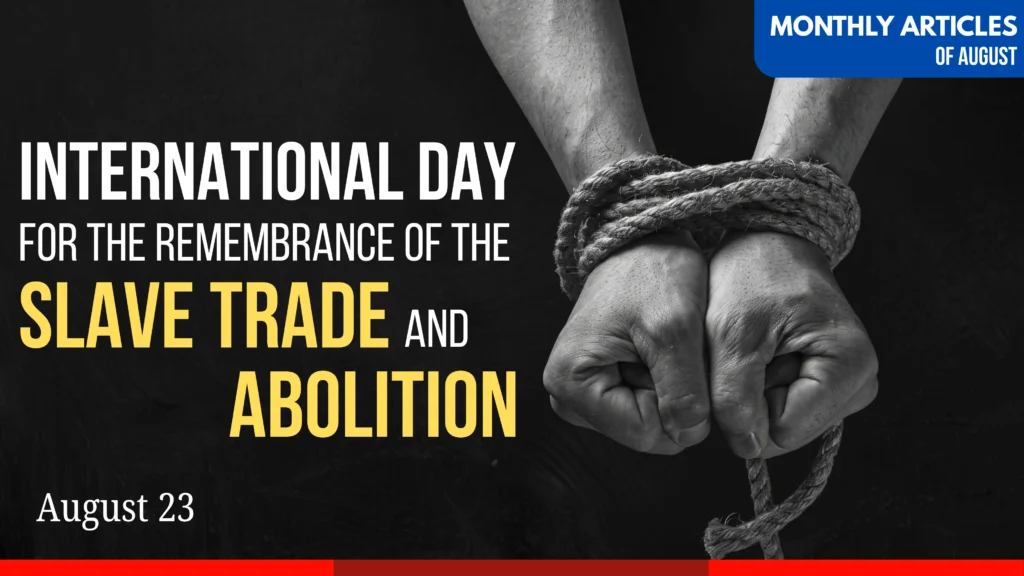
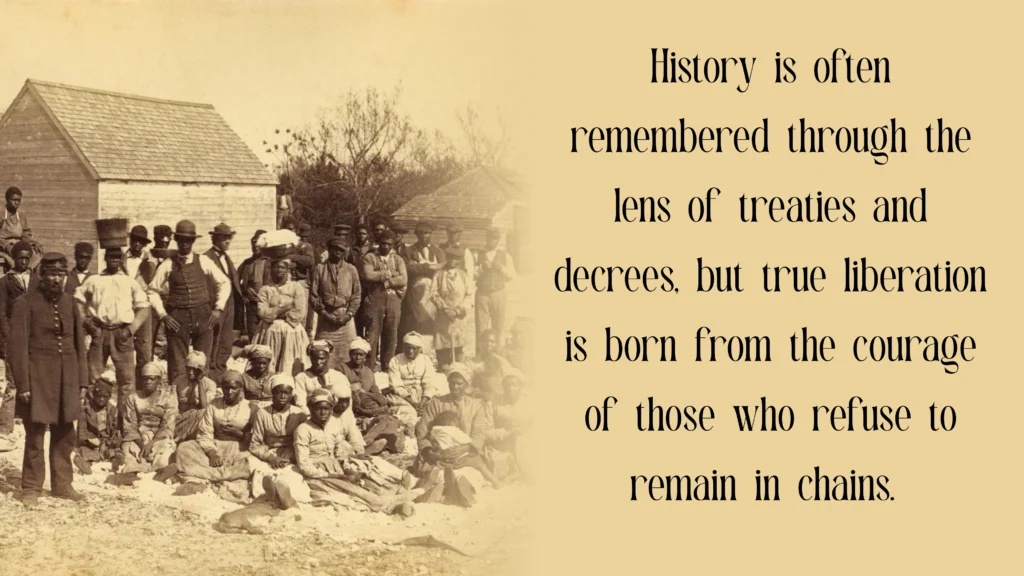
History is often remembered through the lens of treaties and decrees, but true liberation is born from the courage of those who refuse to remain in chains. Every year on August 23, the world observes the International Day for the Remembrance of the Slave Trade and Its Abolition, a day dedicated to honouring human resilience, reflecting on one of history’s darkest chapters and reaffirming our collective commitment to justice and human rights.
For over four centuries, millions of African men, women and children were torn from their homelands, forced into horrific voyages across the Atlantic and subjected to systemic violence. On plantations across the America, enslaved human beings were stripped of their basic legal identity and treated purely as property. They endured unspeakable abuse, backbreaking labour under the whip, sexual violence and the agonizing separation of families at the auction block.
Human dignity, however, cannot be permanently erased. Pushed beyond the limits of human endurance, the enslaved populace began organizing covert resistance. On the night of August 22–23, 1791, in Santo Domingo, enslaved people launched a massive, coordinated revolt. Driven by an unyielding desire for liberty, their uprising ignited the Haitian Revolution. It proved to the world that enslaved populations were not passive victims, but active agents of their own liberation. This historic revolt set off a global domino effect that ultimately forced colonial empires toward emancipation.
The path toward the global abolition of slavery was forged by brave leaders, freedom fighters and statesmen across continents like Toussaint Louverture, a former enslaved man who became the brilliant military general and political leader of the Haitian Revolution, freedom fighters like Harriet Tubman who escaped slavery and returned repeatedly to rescue hundreds via the Underground Railroad and Frederick Douglass, an eloquent orator and former enslaved author relentlessly pushed the moral consciousness of a divided nation. As the 16th President of the United States, Abraham Lincoln played a defining leadership role in the political abolition of slavery in the U.S. Amid the American Civil War, he issued the Emancipation Proclamation in 1863, declaring free all enslaved individuals in Confederate territories and championed the passage of the 13th Amendment, which permanently abolished slavery throughout the United States.
While chattel slavery was legally dismantled over time, its shadows endure. The economic disparities, systemic discrimination and racial prejudices that plague parts of our global community today trace their roots directly back to this historic trade. However, the fight for human rights remains an active duty. Modern forms of forced labour, debt bondage and human trafficking still trap millions across the globe today. Remembering the past serves as a vital reminder that liberty requires constant vigilance.
Remembrance is more than a passive gesture. It demands active engagement. On this day, let us honour the sacrifices of those who broke their chains and the leaders who championed universal liberty. Let their courage inspire us to challenge modern-day inequities and build a world grounded in respect, equality and compassion.
As Rotaractors, our core values centre around Peacebuilding, Conflict Prevention and Diversity, Equity and Inclusion. Honouring this international day is deeply aligned with our mission. As young leaders, we carry the responsibility to Educate, Advocate and Empower.
Written By: –

Rtr. Rasika Pandula
(General Member 2026-27)