
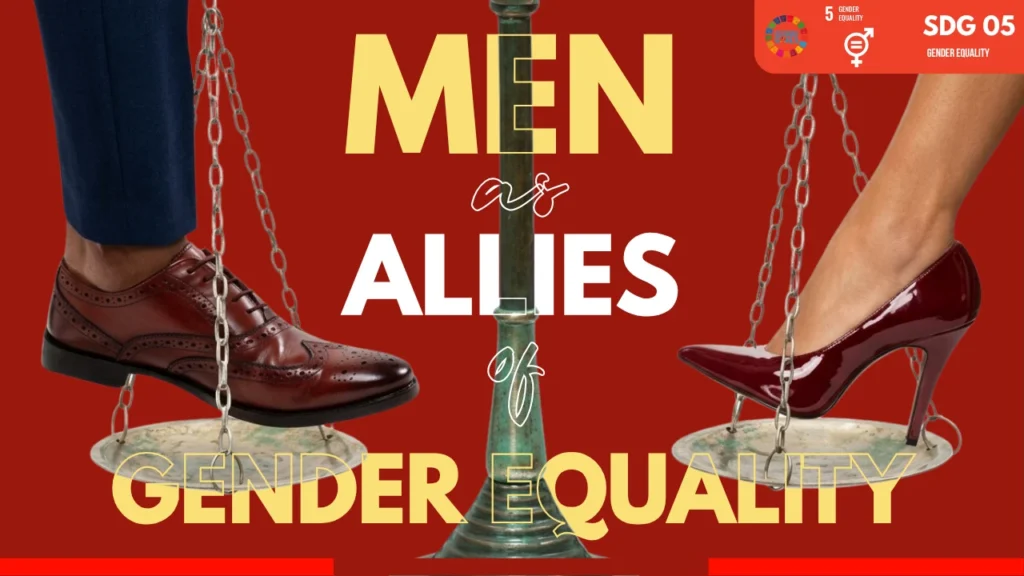
No single article can solve a problem as old and complex as gender inequality. As tangled as it is, where men hold influence, how can we help build a society that’s fair to women and girls? This article is about inequality and none should pretend to. I ask men of this island: what can you do, in the places offered, with humility as a contribution to a conversation that Sri Lankan women have carried for many generations and that men have been too slow to join. The question it asks is simple.
Let us begin with a look at where Sri Lanka stands. Sri Lanka gave the world its woman Prime Minister in 1960. Sri Lanka’s girls fill schools and universities and Sri Lanka’s health and literacy records are admired across South Asia.. The road narrows after graduation. Only about a third of women join the labour force compared with seven in ten men. Women hold less than one in ten seats in Parliament. Surveys have found that most women and girls have faced harassment on public transport. Talent is not the missing ingredient. Opportunity and safety. These are things that society and the men who hold much of its power can change.
Workplaces are the place to begin. Business owners, managers and union leaders decide who is hired, who is paid what and who is promoted. Men in those seats can insist on equal pay scales and transparent promotion criteria. Men can offer hours, safe transport for late shifts and proper complaint systems against harassment that protect the person who speaks up rather than the person who offends. Men can also make parental leave available to men as well as women so that caring for children stops being treated as a career penalty for one gender alone. Men sponsoring women for senior roles and not waiting for women to knock costs little and changes much.
Politics and public institutions need honesty. Women who enter life are too often met with insult rather than debate. Party leaders, who are mostly men can nominate women in seats instead of hopeless ones, back the quota for women in local government and discipline members who use sexist language on platforms or online. Voters can reward parties that do so. Policy made by a balanced table tends to serve everyone better, from healthcare and childcare to transport and public safety.
Safety in spaces is a shared duty. Buses, trains, markets and streets belong to everyone and men make up most of the people who pass through them. Transport staff, police officers and ordinary passengers can be. Encouraged to intervene when harassment occurs. Silence in a bus is not neutrality- it protects the wrongdoer. Where men refuse to laugh at the joke, speak up when a friend crosses the line and believe those who report abuse, harassment loses the comfort of an audience.
Schools and communities shape the term. Teachers, coaches, youth leaders and school boards can make sure that boys and girls learn side by side the value of respect, consent and shared responsibility and that girls are encouraged towards science, technology and sport readily as boys. Religious leaders and community elders hold the trust of villages. Every faith on the island speaks of dignity and compassion. When leaders say plainly that violence against women is a wrong and not a private matter, the message travels further than any law.
The media and the arts have their part well. Editors, producers and advertisers choose which stories are told and who tells them. Programmes that show women as leaders and experts and men as caring and gentle quietly rewrite what a whole generation thinks is normal. Men in these fields can also make room by hiring women writers, directors and journalists and crediting them fairly.
Through all of this, good allies keep habits. Men listen before men speak. Men follow the lead of women’s organisations that have worked for decades, from village societies to aid centres, rather than taking over their stage. Men support groups with time, money and public backing. Men act every day. Not only on International Women’s Day, but men accept correction graciously. Above all, men remember that equality takes nothing from men. A fairer society is a richer and more stable one, for everyone who lives in it.
Think, then, of this island, the teardrop in the Indian Ocean, with its tea‑covered hills in the mist, its monsoon rains that feed the paddy fields, its temples lit at dusk and its shores washed by a patient sea. Sri Lanka has always been a land of resilience, where people rebuild after every storm. The next rebuilding will not be of roads or harbours. Of the way we treat one another. If it is done well, a girl in Kandy or Jaffna or Galle or Batticaloa will walk to school and to work without fear, earn without apology and lead without asking permission. The girl will not do it alone. The girl will not do it in spite of her countrymen. The girl will do it because the men beside her chose, one workplace, one classroom and one village at a time, to stand with her. That is the Sri Lanka worth hoping for. That is, within reach.
Written By: –

Rtr. Nimsara Hewage
(Junior Blog Team Member 2026-27)