
For decades, the global economic order rested on a clear consensus: lower tariffs, open borders and multilateral rules set by institutions like the World Trade Organisation (WTO). Today, that architecture is undergoing its most radical transformation in generations. International trade law is no longer governed solely by free market economics; instead, it has become an active instrument of national security, industrial policy and geopolitical strategy. As nations increasingly deploy tariffs, economic sanctions and export controls to achieve non-economic objectives, global businesses face an intricate regulatory maze where legal compliance directly intersects with international diplomacy.
Tariffs, historically used to raise government revenue or protect nascent domestic industries, have evolved into primary levers of economic coercion and geopolitical negotiating chips. Rather than relying on traditional WTO dispute settlement mechanisms, major economies routinely invoke broad national security exceptions to impose sweeping, targeted duties on foreign imports. From aggressive retaliatory duties on steel and critical minerals to new border adjustments targeting carbon intensity, modern tariffs act as strategic barriers. For multinational corporations, this unilateral tariff landscape introduces severe supply chain friction, rendering pricing models and long term procurement contracts volatile.
Parallel to rising tariffs is the unprecedented expansion of economic sanctions. Unilateral and multilateral sanction regimes, ranging from asset freezes and financial messaging blockades to secondary sanctions on third country entities, have redefined cross-border commerce. Modern sanctions no longer target entire sovereign states in isolation; they are precision-guided regulatory tools designed to sever specific banks, oligarchs, state-backed enterprises and dual use technology supply chains from global capital markets. Operating in this environment requires companies to maintain continuous, real time screening of counterparties, ownership structures and financial intermediaries to avoid staggering penalties and reputational damage.

While tariffs regulate what enters a nation, modern international trade law is increasingly focused on controlling what leaves it. Export control regimes governing advanced semiconductors, artificial intelligence chips, quantum computing hardware and critical raw materials have become central to national defence frameworks. Governments are enforcing strict end user and end use restrictions, requiring technology firms to audit their global distribution networks. This “securitisation” of high tech trade forces multinational firms to navigate conflicting jurisdictional mandates, such as complying with domestic export bans while avoiding foreign anti-boycott regulations, creating a complex web of legal exposure.
In response to tariff uncertainty and sanctions exposure, the structural map of global trade is shifting from cost optimised globalism to resilience-oriented regionalism. Strategies such as “friend-shoring” (sourcing inputs exclusively from geopolitical allies) and “near-shoring” (relocating production closer to end consumer markets) are reshaping trade corridors. Consequently, preferential regional trade agreements and bilateral treaties are replacing vast multilateral frameworks. However, restructuring supply chains introduces new legal hurdles, including navigating stringent rules of origin requirements, country of origin verification audits and complex local content mandates.
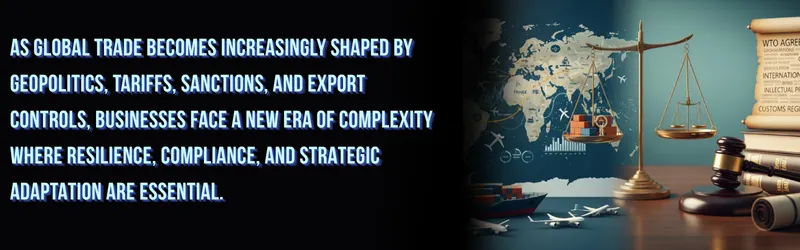
In this hyper regulated trade environment, reactive legal compliance is no longer sufficient. Corporate leaders and legal departments must integrate geopolitical risk assessments into every operational decision, from initial supplier selection to M&A due diligence. Implementing robust global trade compliance programs, featuring automated sanctions screening, strict export control classification and dynamic contract provisions addressing tariff adjustments, is now a core operational necessity. Organisations that proactively master the nexus of trade law, national security and regulatory compliance will protect their bottom line while positioning themselves to capitalise on emerging regional trade opportunities.
Written By: –

Vidun Methupa Dissanayaka
(Wayamba University Of Sri Lanka)
Designed by: –

Rtr. Chamodya Anushani
(Senior Blog Team Member 2026-27)