
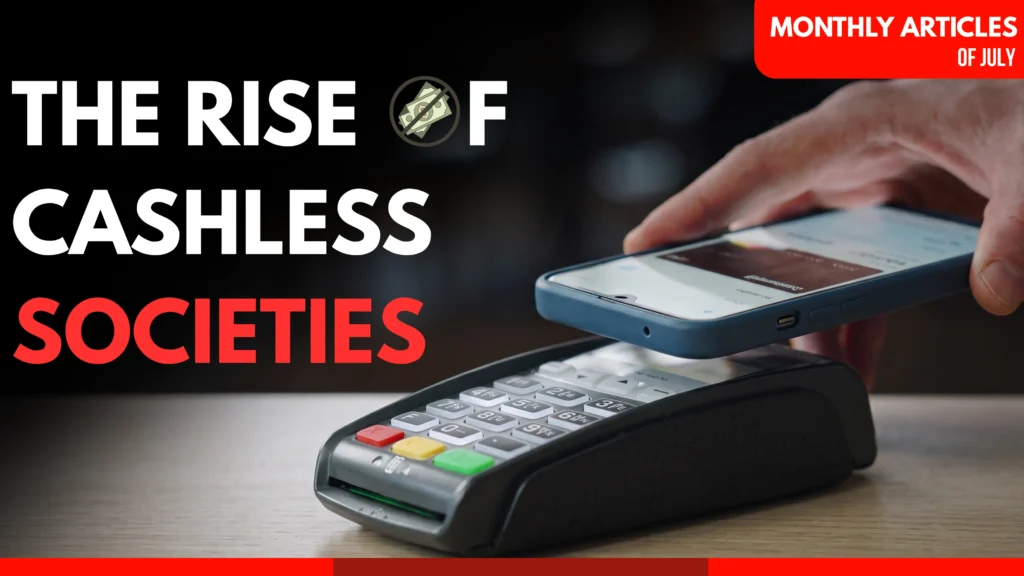
“Sorry, we only accept card or digital payments.”
A sentence that has become increasingly common over the past few years.
Think about the last time you paid for something. Was it with cash? Or did you simply tap your card, scan a QR code, or make a payment through your phone? Whether you’re buying a coffee, paying for a taxi, or shopping online, physical money is slowly taking a backseat as digital payments become the new normal.
A cashless society refers to a society where most financial transactions take place electronically instead of using physical cash. Payments can be made through debit or credit cards, mobile wallets, online banking, QR codes and contactless payment systems. Countries such as Sweden and Norway are already among the closest in the world to becoming cashless, while many other nations are rapidly moving in the same direction.
The COVID 19 pandemic played a major role in accelerating this shift. As people avoided physical contact and businesses embraced digital technology, contactless payments became safer, faster and more convenient. Today, ordering food, paying utility bills, transferring money to friends, or even donating to charity can all be done within a few taps on a smartphone.
There are many advantages to living in a cashless society. Digital payments are convenient, reduce the need to carry cash and often make transactions much quicker. They also make it easier to track spending, helping individuals manage their finances more effectively. For businesses, electronic payments reduce the risk of theft and simplify record keeping. Governments also benefit, as digital transactions can improve transparency and make tax evasion and illegal financial activities more difficult.
However, a cashless society is not without its challenges.
Not everyone has access to smartphones, bank accounts, or reliable internet connections. Elderly individuals and people living in rural areas may find digital payment systems difficult to use. Cybersecurity has also become a growing concern. Unlike losing a wallet, digital payment systems can become targets for hackers, online scams and identity theft. A technical failure or power outage could even leave people temporarily unable to make payments.
Privacy is another important issue. Every digital payment leaves behind a trail of information. From where we shop to what we buy and how often we spend, our financial habits can be recorded and analysed. While this data can improve services and prevent fraud, it also raises questions about how much personal information should be collected and who has access to it.
The goal of becoming a cashless society should not simply be to eliminate physical money. Instead, it should be about creating a financial system that is secure, accessible and inclusive for everyone. As technology continues to evolve, it is important to ensure that no one is left behind in the digital transition.
Whether you still carry cash in your wallet or rely entirely on your phone to make payments, one thing is clear, the way we use money is changing. As we embrace convenience and innovation, we must also remember the importance of security, privacy and equal access. After all, the future of money isn’t just about going cashless; it’s about making financial services work for everyone.
Written By: –

Rtr. Kawindra Wickramasinghe
(Co Editor 2026-27)