
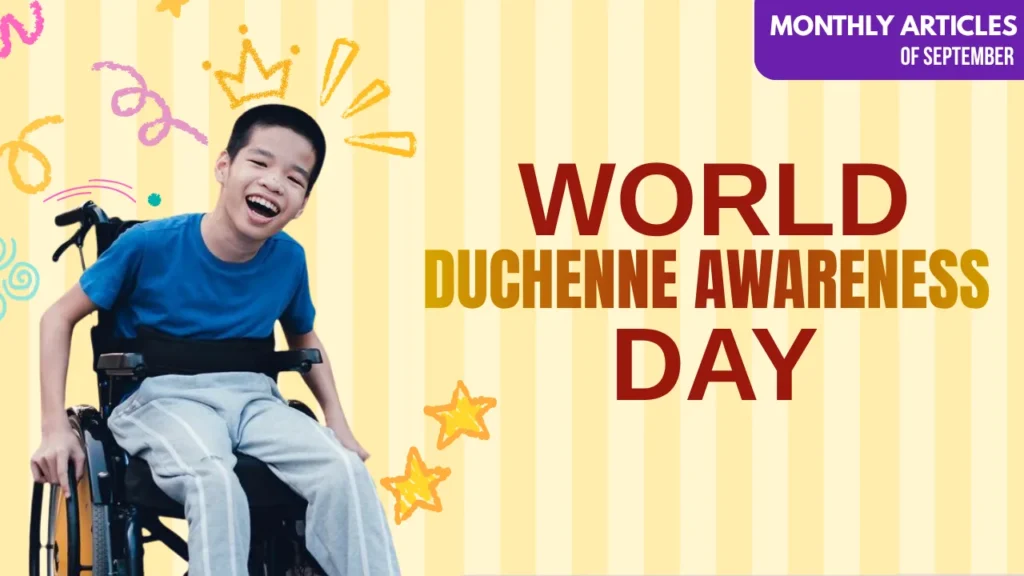
World Duchenne Awareness Day is observed every year on 7th September to raise global awareness about Duchenne muscular dystrophy (DMD), a rare and serious genetic disorder that primarily affects muscles. The day provides an opportunity to educate the public about Duchenne, recognise the challenges faced by individuals and their families and encourage greater support for research, healthcare and inclusion. It also gives a voice to people living with Duchenne and reminds society that rare diseases deserve attention and understanding.
Duchenne muscular dystrophy is a genetic condition that causes muscles to become progressively weaker over time. It mainly affects boys, although girls and women can also be affected in rare circumstances. DMD is caused by changes in the gene responsible for producing dystrophin, a protein that helps protect muscle fibres. When dystrophin is absent or severely reduced, muscles become damaged and gradually lose their strength. The condition usually begins in early childhood and children may experience difficulties with running, climbing stairs, jumping, or getting up from the floor.
The symptoms of Duchenne can vary from person to person, but muscle weakness is one of its main characteristics. Children with DMD may fall frequently, have difficulty keeping up with other children, or develop enlarged calf muscles. As the condition progresses, muscle weakness can affect mobility and everyday activities. It can also affect muscles involved in breathing and heart function. Therefore, Duchenne is not simply a condition that affects movement; it can have a significant impact on many aspects of a person’s health and quality of life.
World Duchenne Awareness Day plays an important role in increasing public understanding of the condition. Because Duchenne is a rare disease, many people may have little or no knowledge about it. Lack of awareness can sometimes lead to misunderstanding, social isolation, or delayed recognition of symptoms. Awareness campaigns can help communities understand the experiences of people living with Duchenne and encourage them to create supportive and inclusive environments. Schools, workplaces, healthcare institutions and communities all have a role to play in ensuring that individuals with disabilities are treated with dignity and respect.
The day is also an opportunity to recognise the important role played by families and caregivers. Caring for a person living with Duchenne can require significant emotional, physical and financial commitment. Parents and caregivers may need to manage medical appointments, treatments, educational needs, mobility challenges and changes in daily routines. They also provide continuous emotional support and encouragement. Supporting families through reliable healthcare services, counselling, education, financial assistance and community networks can make a meaningful difference in their lives.
Research is another major focus of Duchenne awareness. Although there is currently no complete cure for DMD, medical research has led to improvements in diagnosis, treatment and disease management. Researchers continue to explore new therapies that may slow disease progression or address the underlying genetic causes. Greater awareness can encourage governments, organisations, researchers and communities to invest in scientific research and improve access to appropriate healthcare. Early diagnosis and proper medical care can also help individuals and families make informed decisions about managing the condition.
Young people can contribute significantly to Duchenne awareness. Students and youth organisations can organise awareness campaigns, educational programmes, fundraising activities, social media campaigns and community events. Sharing accurate information can help reduce misconceptions and encourage greater empathy. Instead of focusing only on the limitations caused by Duchenne, awareness activities should also highlight the abilities, aspirations, talents and achievements of people living with the condition.
In conclusion, World Duchenne Awareness Day is an important global occasion that promotes knowledge, empathy, inclusion and hope. It reminds us that people living with rare diseases should not be overlooked or defined only by their medical conditions. By increasing awareness, supporting families, encouraging research and creating inclusive communities, society can help improve the quality of life of people affected by Duchenne muscular dystrophy. Ultimately, the message of the day is simple but powerful: awareness can create understanding, understanding can create support and support can create meaningful change.
Written By: –

Rtr. Adithyaya Kawindi
(Senior Blog Team Member 2026-27)