
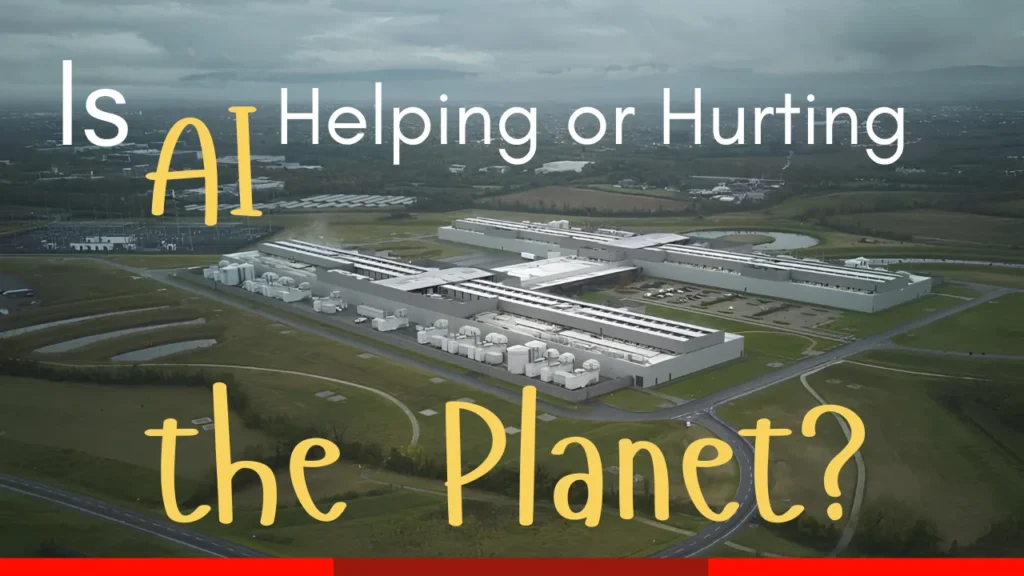
At present, you can’t go five minutes without hearing about AI. Whether it’s people using chatbots to write assignments, artists arguing with AI image generators or companies replacing workers with automation, artificial intelligence has become unavoidable. Some people think AI is the greatest invention of this generation while others think it’s the beginning of a dystopian sci-fi movie.
But one thing many people don’t talk about enough is AI’s impact on the environment. Because while everyone is busy debating whether AI will steal our jobs or not, very few people stop to think about how much damage these systems might actually be doing to the planet.
Most people assume AI is “clean” because it exists digitally. No smoke, no factories, no visible pollution. But behind every AI chatbot or image generator are massive data centers filled with thousands of computers running 24/7. These servers consume enormous amounts of electricity just to train and operate AI systems.
Training advanced AI models requires an unbelievable amount of power. Some studies even compare the carbon footprint of training a single large AI model to the lifetime emissions of multiple cars. And considering how fast AI is growing, energy consumption is only going to increase further.
On top of electricity usage, data centers also require huge cooling systems because the servers heat up extremely quickly. This means massive amounts of water are used simply to prevent these systems from overheating. So while people joke about asking AI silly questions at 3am, somewhere a server is working overtime trying not to combust into flames.
Another major issue is electronic waste. Technology evolves so fast that companies constantly replace hardware with newer and more powerful systems. Old processors, graphics cards and servers eventually become electronic waste, which can seriously harm the environment if not disposed properly.
However, despite all these negatives, AI is not entirely harmful. In fact, AI can also become one of humanity’s most powerful tools in protecting the environment. Artificial intelligence is already being used to monitor climate change, predict floods and wildfires and improve disaster warning systems.
AI is also helping improve renewable energy systems like solar and wind power. Since renewable energy depends heavily on weather conditions, AI helps predict energy usage and improve efficiency. Even smart cities use AI to reduce traffic congestion and energy waste.
In agriculture too, AI has become increasingly useful. Smart farming systems can help farmers monitor crops, reduce water waste and detect diseases much faster. This can improve food production while reducing environmental damage.
In conclusion, AI itself is neither completely good nor completely bad. The real issue depends on how humans choose to use and regulate it. If developed responsibly, AI could help solve some of the world’s biggest environmental problems. But if companies continue prioritizing profit and rapid expansion without considering sustainability, AI may end up becoming another major contributor to environmental destruction.
Like most technology, AI can either help the planet heal or help destroy it faster. And honestly speaking, humanity’s track record with that decision isn’t exactly reassuring.
Written & Design By: –

Rtr. Kawindra Wickramasinghe
(Junior Blog Team Member 2025-26)