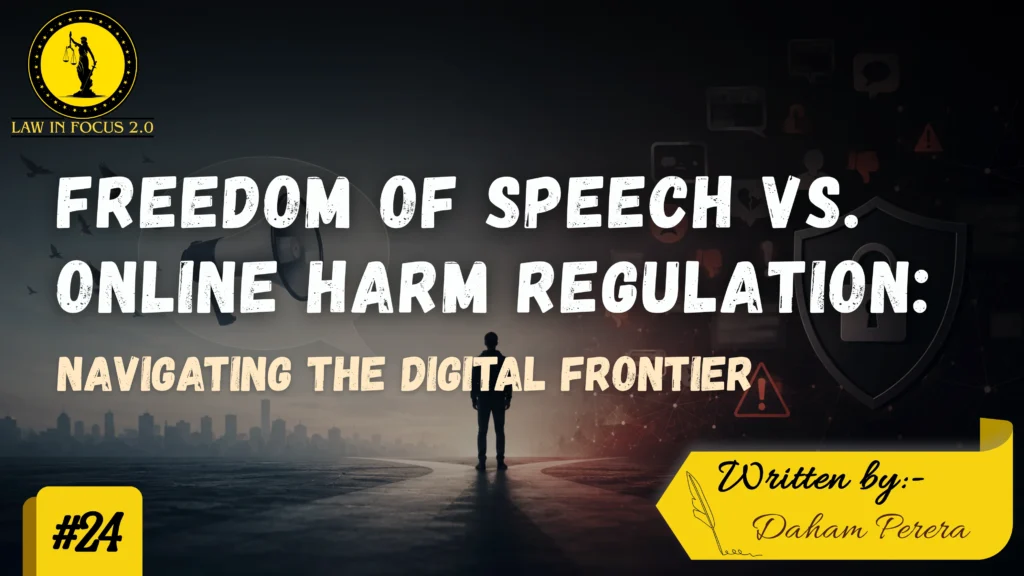
The digital age promised a democratised global public square where anyone with an internet connection could share ideas freely, question authority and connect across borders. However, as social media platforms, messaging applications and video networks became the primary avenues for public discourse, that democratic vision met a complex reality: the rapid amplification of online harm. Today, policymakers, tech companies and civil liberties advocates are locked in a contentious debate over how to curb cyberbullying, hate speech, deepfakes and state-sponsored disinformation without dismantling fundamental constitutional protections for free expression.
The Evolution of the Digital Town Square
When early internet regulations were established-such as Section 230 of the Communications Decency Act in the United States-they generally shielded online platforms from liability for user-generated content. This liability shield fostered unprecedented innovation and unprecedented speech, transforming internet platforms from simple message boards into global media giants. Yet, the business models that powered this expansion rely heavily on engagement-driven algorithms designed to maximise user attention. Because provocative, inflammatory, or outrage-inducing content generates higher engagement, modern digital infrastructure naturally incentivises the spread of extreme content, complicating traditional legal understandings of speech and public safety.
The Human Cost of Unregulated Digital Harms
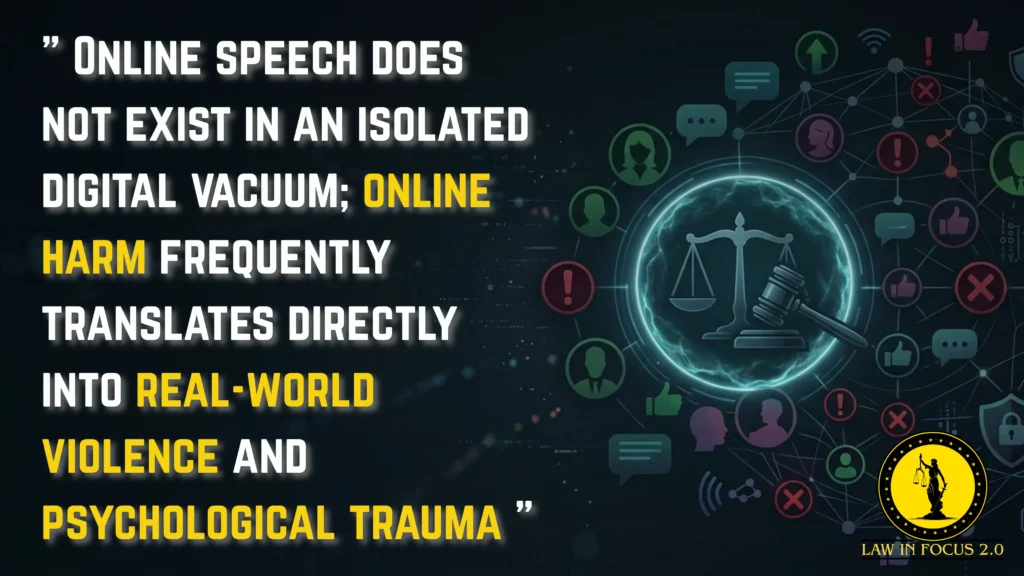
Proponents of stricter regulatory oversight emphasise that online speech does not exist in an isolated digital vacuum, online harm frequently translates directly into real-world violence and psychological trauma. Targeted harassment campaigns, algorithmic radicalisation, non-consensual deepfake images and coordinated disinformation campaigns during elections pose direct threats to vulnerable individuals, public health and democratic stability. In this view, leaving platform moderation entirely to market forces or private corporate discretion has proven inadequate, creating an environment where the speech rights of bad actors effectively suppress or silence marginalised communities through intimidation.
The Free Speech Imperative and the Danger of Overreach
On the other side of the legal spectrum, civil liberties groups and legal scholars warn that poorly drafted regulations present severe risks to democratic freedoms. Laws that penalise platforms for hosting “harmful” or “misleading” content inevitably push corporate entities toward over-moderation, erring on the side of caution by censoring controversial, political, or minority viewpoints to avoid astronomical fines. Furthermore, state-mandated content controls can easily be weaponised by authoritarian or overreaching governments to criminalise dissent, suppress independent journalism and silence opposition under the guise of protecting public order.
International Legal Approaches: Divergent Strategies
Governments around the world have adopted radically different regulatory blueprints to address this challenge. The European Union has taken a structural legislative approach with its Digital Services Act (DSA), requiring systemic risk assessments, algorithmic auditing and swift removal processes for illegal content while attempting to safeguard user appeal rights. Conversely, in the United States, strong First Amendment jurisprudence limits the government’s ability to restrict speech based on its content or viewpoint, driving debates toward transparency requirements, data privacy protections and antitrust scrutiny rather than direct content moderation mandates.
The Black Box of Algorithmic Management and AI
The challenge is further magnified by the integration of generative artificial intelligence and automated content moderation. Tech platforms process billions of posts daily, making human oversight impossible at scale and forcing reliance on automated AI classifiers. However, these systems often lack context, nuance and cultural awareness, resulting in arbitrary takedowns of legitimate expression while missing sophisticated harms. As AI-generated deepfakes and automated bot networks become cheaper and more believable, distinguishing between authentic user expression and malicious digital manipulation becomes one of the greatest legal and technical hurdles of our era.
Striking a Sustainable Balance for the Future
Resolving the tension between protecting speech rights and preventing digital harm requires moving past binary debates over “censorship versus anarchy.” Rather than focusing strictly on censoring specific words, modern legal reform is increasingly shifting toward system architecture, process transparency and user empowerment. Standardised transparency rules, independent algorithmic audits, robust user appeal mechanisms and digital literacy initiatives offer a path forward that holds digital platforms accountable without granting states or corporations unchecked control over human thought and expression.
Written By: –

Daham Perera
(Faculty of Management and Finance)
(University of Kelaniya )
Designed By: –

Rtr. Sanidu Karunarathne
( Senior Blog Team Member 2026-27)