
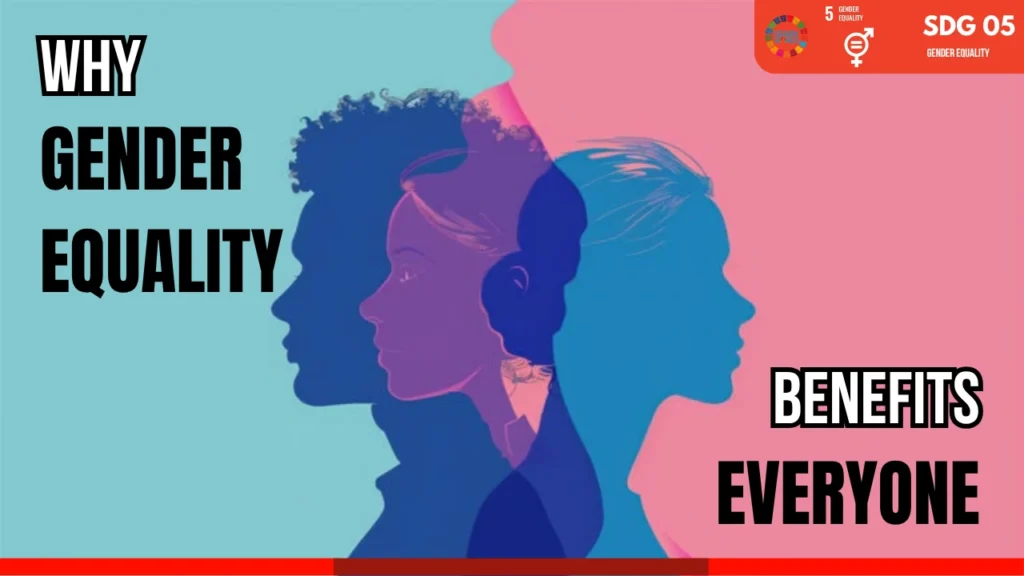
For a long time, I believed that gender equality was a debate about women versus men. Men are portrayed as the villains of the story, who limit, push back and keep women from all their capabilities and potential to grow into someone better. But when you look closely at how people actually live, that idea falls apart. Gender equality is not about one gender dominating and the other being oppressed. It is about removing the limits placed on every gender, so that everyone can live to their fullest potential.
Growing up, I heard the same cultural rules again and again: men don’t cry, men are not weak, a woman’s place is the kitchen. Just hearing them was exhausting. Now imagine living them: a boy swallowing his tears to look strong, a girl setting aside her dreams because she was told they didn’t belong to her.
I knew a girl who topped her school in both her O Levels and A Levels. She spent sleepless nights chasing one dream: to become a doctor. But when the results came, there was no university for her. She was the eldest of several daughters, her age was “right,” and so she was married off.
A few years later, I saw her again, a young woman already carrying the weight of a household and children. I couldn’t help but think of all that effort, all those nights and the doctor she might have been. Her talent didn’t disappear. It was simply never given a chance. This story is not rare. It plays out in many families, quietly, every year.
Looking back, I realise gender equality carries benefits far beyond fairness.
When women are given equal access to education and work, entire nations prosper. More women in the workforce means higher productivity, a stronger economy and a growing GDP. Research from the IMF and others suggests that closing gender gaps in employment could add trillions of dollars to the global economy. Educating girls and giving women financial independence lifts entire communities out of poverty. When half of a population is allowed to contribute, everyone benefits.
Better decisions and innovations can emerge from companies just by having a diverse team of all genders, as they can view and analyse problems from different perspectives. Gender equality also lets us loosen the rigid expectations of men:
Men are freed from the “Provider” burden, the pressure to hide emotions, to be independent and financially stable. With the contribution of women in the family, men too can relax, they too can feel normal and not always carry a big burden on their shoulders. Furthermore, when both parents are emotionally and physically available to their children, they do better in life. Having an educated and independent mother and a dad who loves sharing kitchen space and household chores makes a beautiful, stable home.
Overall, gender equality builds a happy, safe and healthy society. Iceland leads the world in gender equality, having closed about 93% of its gender gap, while Finland has been named the world’s happiest country for nine years in a row. This pattern is no coincidence. When women and men share opportunities and responsibilities, communities tend to enjoy stronger trust, better health and greater well-being.
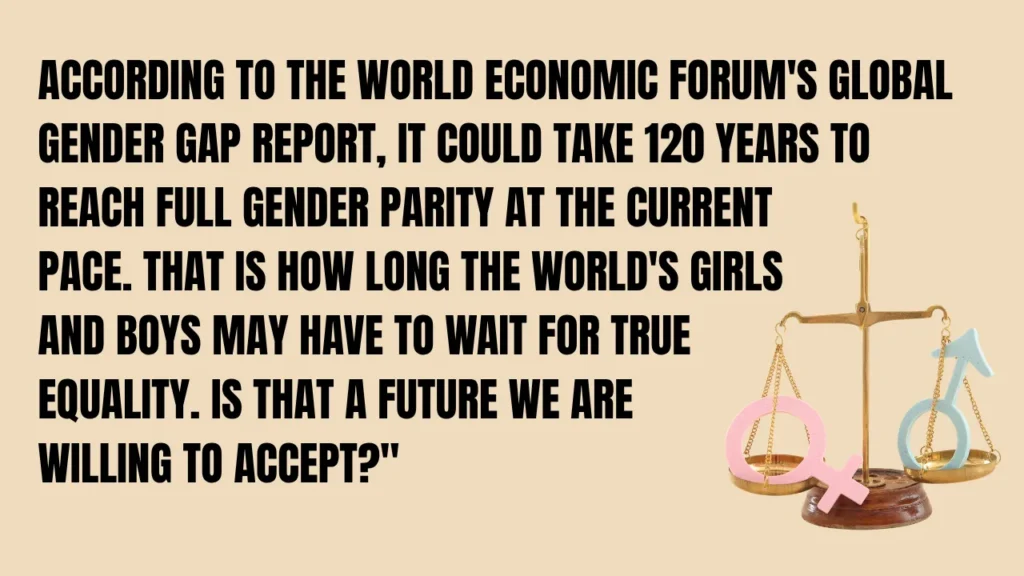
According to the World Economic Forum’s Global Gender Gap Report, it could take 120 years to reach full gender parity at the current pace. That is how long the world’s girls and boys may have to wait for true equality. Is that a future we are willing to accept?”
Written By: –

Rtr. Sumaiya Waais
(Junior Blog Team Member 2026-27)